Marketing for
implant cases.
A full-arch case is $20,000 to $40,000, and many patients treat both. That case value justifies acquisition costs most practices won't spend — which is exactly why the corporate full-arch centers are taking them. We build the search, paid, and video system that wins those patients back.
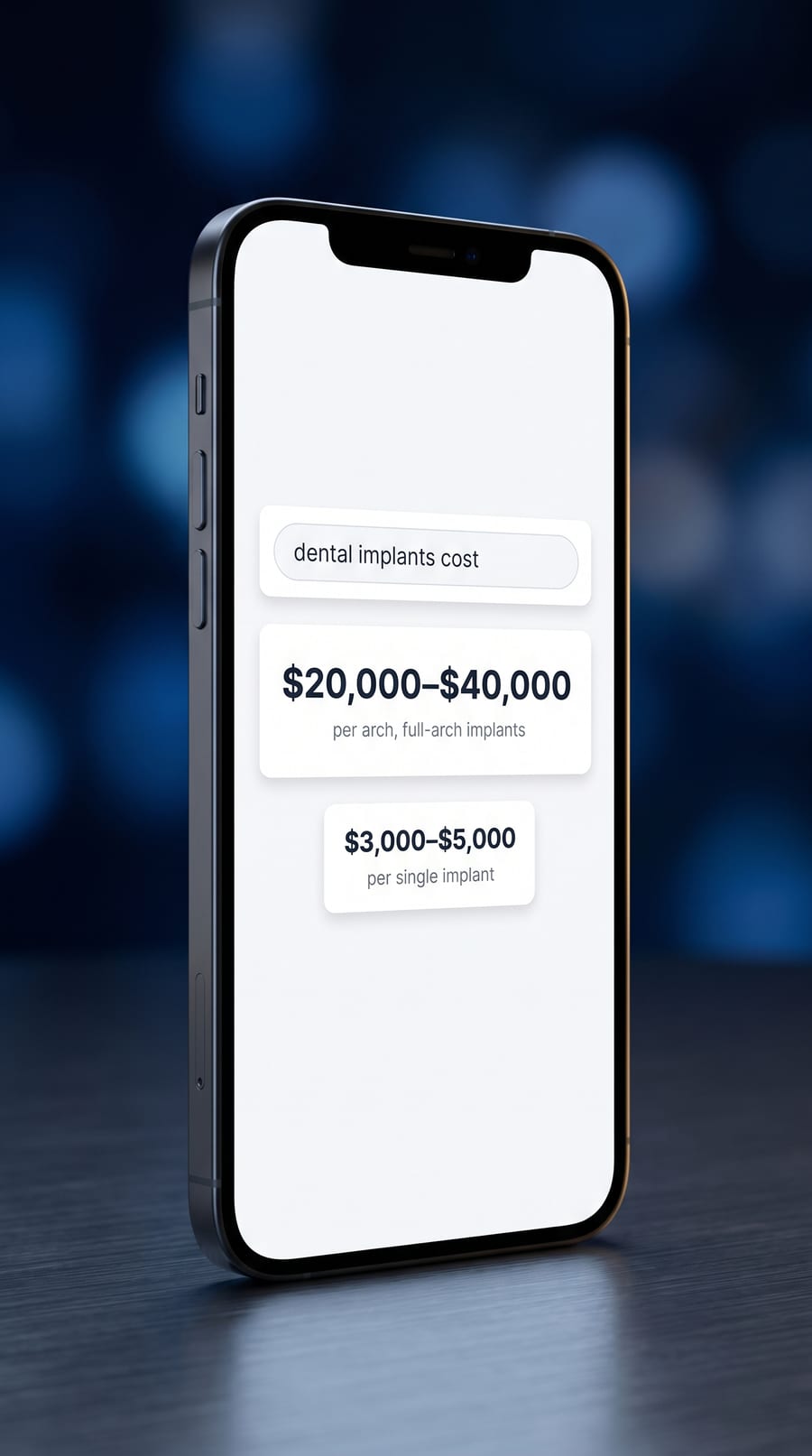
A $2,000 patient cost is cheap against a $30,000 arch
High-ticket cases, won in search.
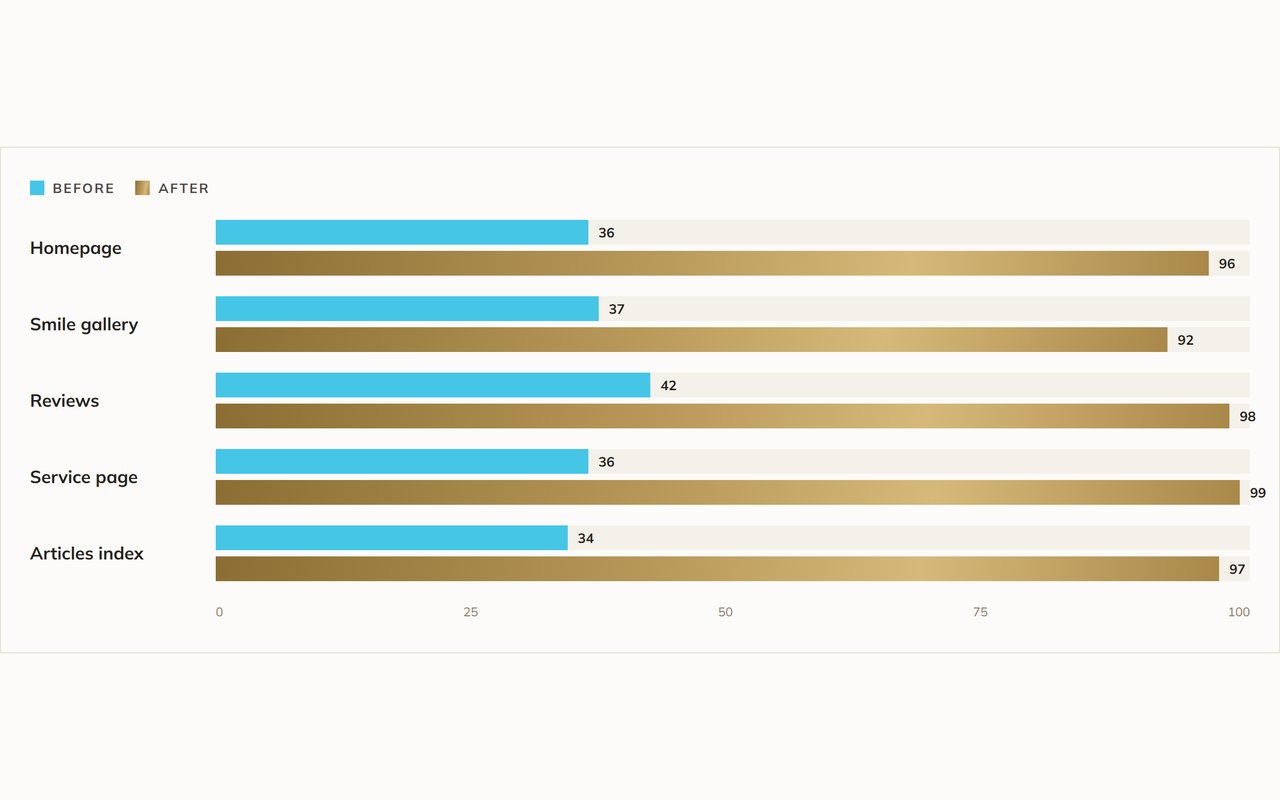
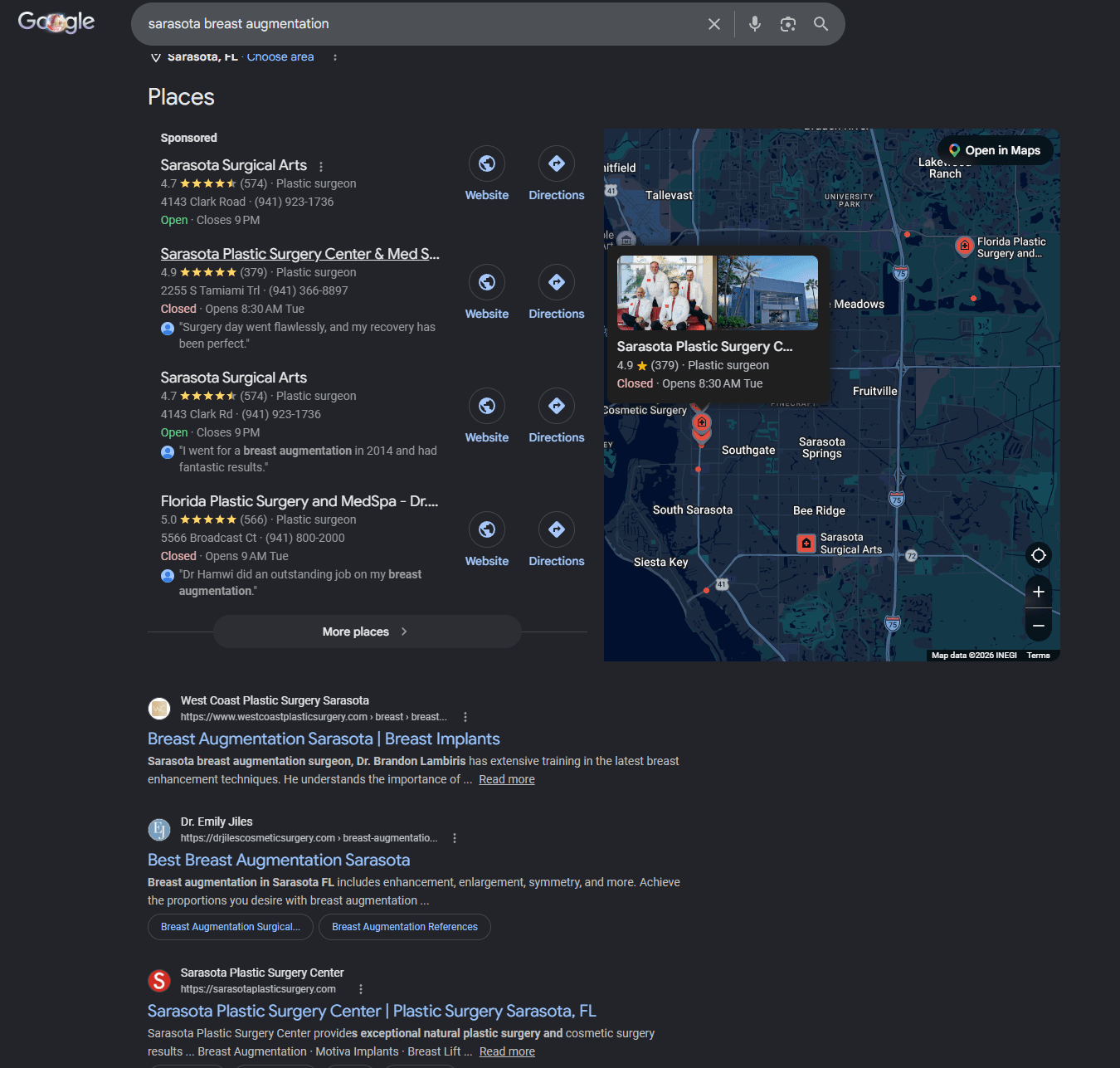
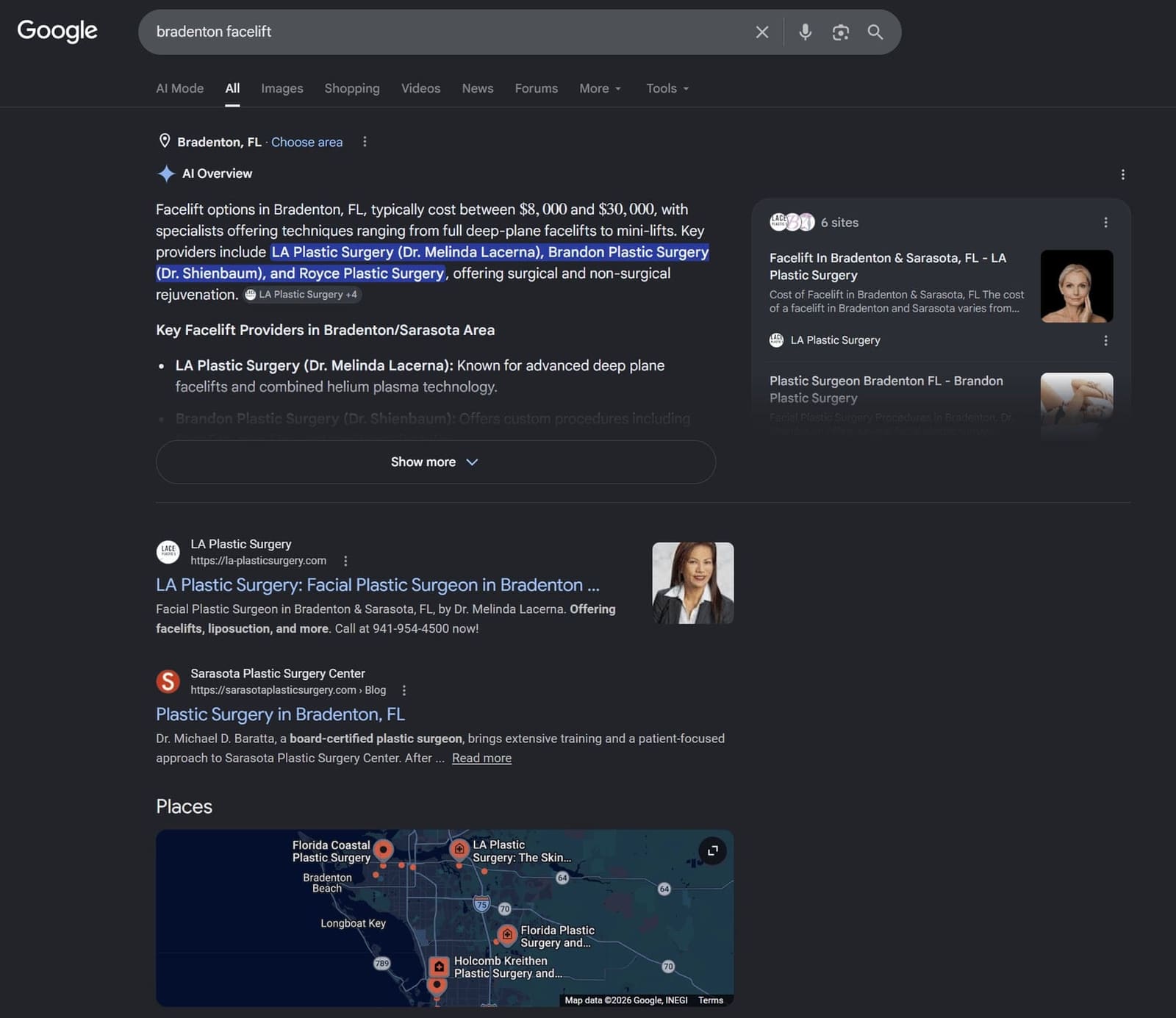
Real screenshots from our work: Sarasota Smile Design, a cosmetic dental practice, and our plastic, facial, and hair practices. Every one links to its case study.
The 10 secrets of dental implant marketing
Run the math before you flinch at the number
$800-$2,000 to acquire an implant patient looks insane next to a hygiene patient and is trivial next to a $30,000 arch. The corporate full-arch centers ran this math years ago. That's why they're buying every click in your market.
Answer the cost question first
'How much are dental implants' is the highest-volume implant search there is. Publish real ranges, explain what moves them, and put the monthly financing figure right next to the total. Hiding price hands the conversation to whoever doesn't.
Single-tooth and full-arch are different patients
A missing molar and a failing dentition are different fears, different budgets, and different searches. One implant page serving both converts neither. Build the paths separately.
Lead with financing, not with technology
The obstacle is almost never whether the patient wants teeth — it's the number. Monthly payment math, third-party lenders, and phased treatment options remove more friction than any implant system you could name.
Patient stories carry the shame
Full-arch patients have usually hidden their mouth for years and put treatment off out of embarrassment. Another patient on camera saying that out loud does what no ad can. It is the single highest-converting asset in this category.
Show the day, not the diagram
Cutaway illustrations of a titanium post sell nobody. Walking a patient through the consult, the CBCT, the surgery day, and the reveal removes the fear of the unknown, which is the actual objection.
Own the AI answer on candidacy
'Am I too old for implants,' 'do I have enough bone,' 'implants vs dentures' — these are now answered by ChatGPT and AI Overviews before you're ever contacted. Structured, clinician-authored answers get cited there.
Compete with the full-arch centers on accountability
The national centers win on volume and financing. You win on the surgeon staying in the room, the follow-up, and the person who answers when something goes wrong. Say that plainly — it's the reason patients leave them.
The consult is the conversion point, not the click
Implant marketing that stops at the form fill fails. Track keyword to call to consult to case, record the calls, and train the treatment coordinator — that handoff is where most implant budgets quietly die.
Nurture the months in between
Nobody signs a $30,000 case on the first visit. Financing options, more patient stories, recovery detail, sequenced over the weeks the patient spends deciding. Most practices quote once and go silent.
Straight answers
Is $2,000 per implant patient too much to pay?
Against a $20,000-$40,000 arch and $8,000-$40,000 in lifetime value, no — it's one of the best ratios in healthcare marketing. It's too much only if the consult doesn't convert, which is a treatment-coordination problem, not an advertising one.
How do we compete with the national full-arch centers?
Not on price or ad volume. On the surgeon being the person who treats you, on follow-up care, and on being reachable when something needs adjusting. Publish that difference explicitly — it's the stated reason most patients leave those centers.
Should we advertise All-on-4 by name?
Patients search the branded term heavily, so yes, target it — but win the education searches around it too: cost, candidacy, alternatives, recovery. The patient comparing options is worth more than the one who's already been sold a brand name.
How long before implant marketing pays back?
Paid search produces consults in 30-60 days; the cases close over the following one to three months as financing gets arranged. Organic and AI visibility take 6-12 months and then lower blended acquisition cost permanently.
See who's winning implants in your market.
Free audit: who ranks, who's bidding, what they spend, and where the opening is. No obligation.