A dental site that
books patients.
Seven in ten of your visitors arrive on a phone, and 38% of new-patient calls go unanswered during business hours. A dental site earns its keep by closing that gap: fast on mobile, booking above the fold, and a procedure page for every case worth having. We build it, we own the speed, and you own the asset.
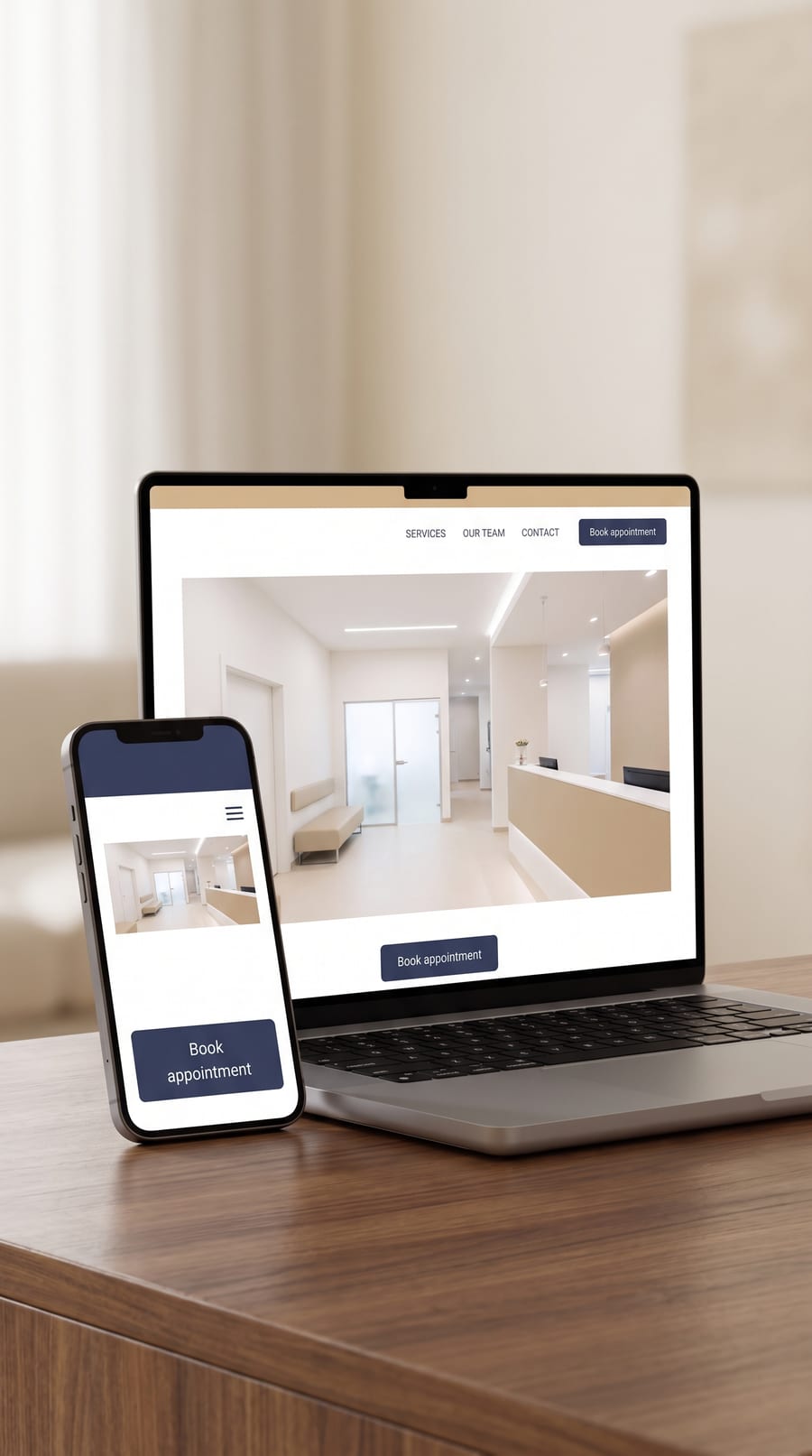
The site isn't a brochure. It's the front desk
Sites we build, and the scores they ship with.
Real screenshots from our work: Sarasota Smile Design, a cosmetic dental practice, and our plastic, facial, and hair practices. Every one links to its case study.
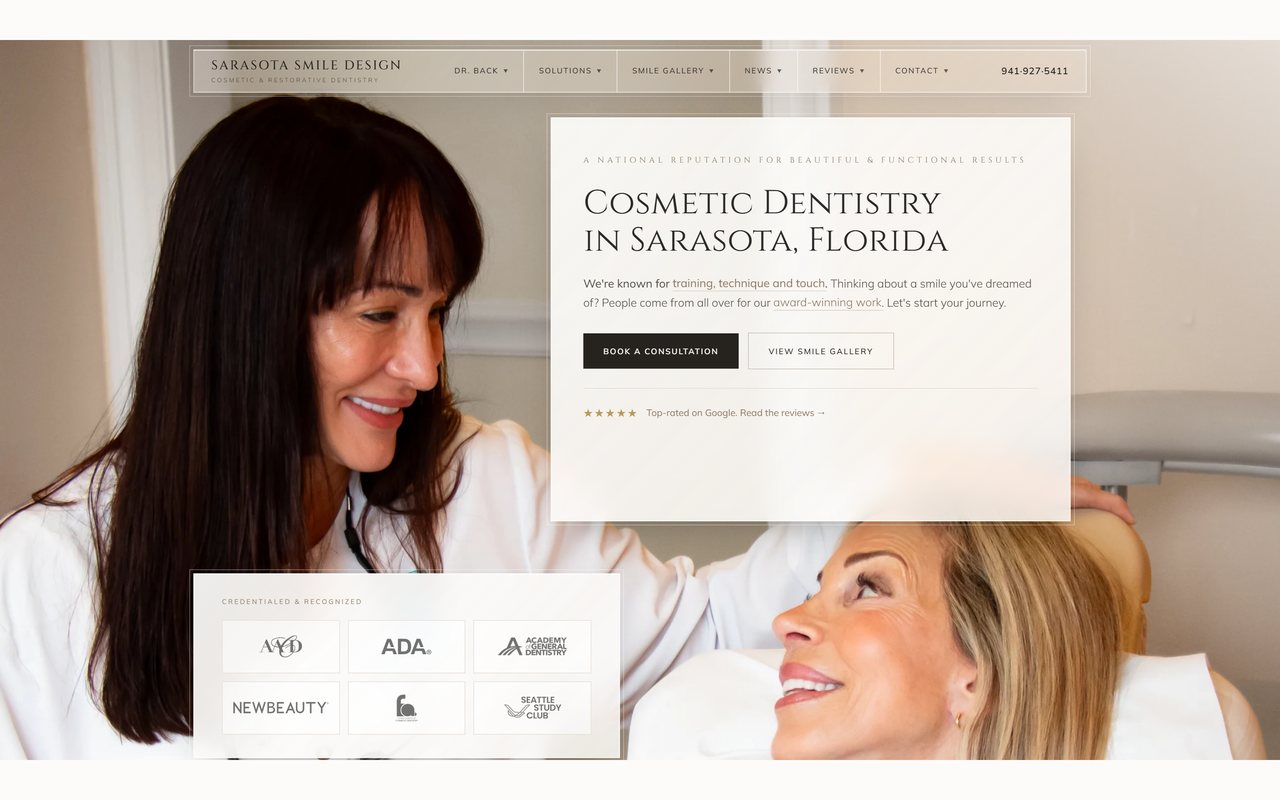
A cosmetic dental site rebuilt around video and the practice's own photos.
From Sarasota Smile Design →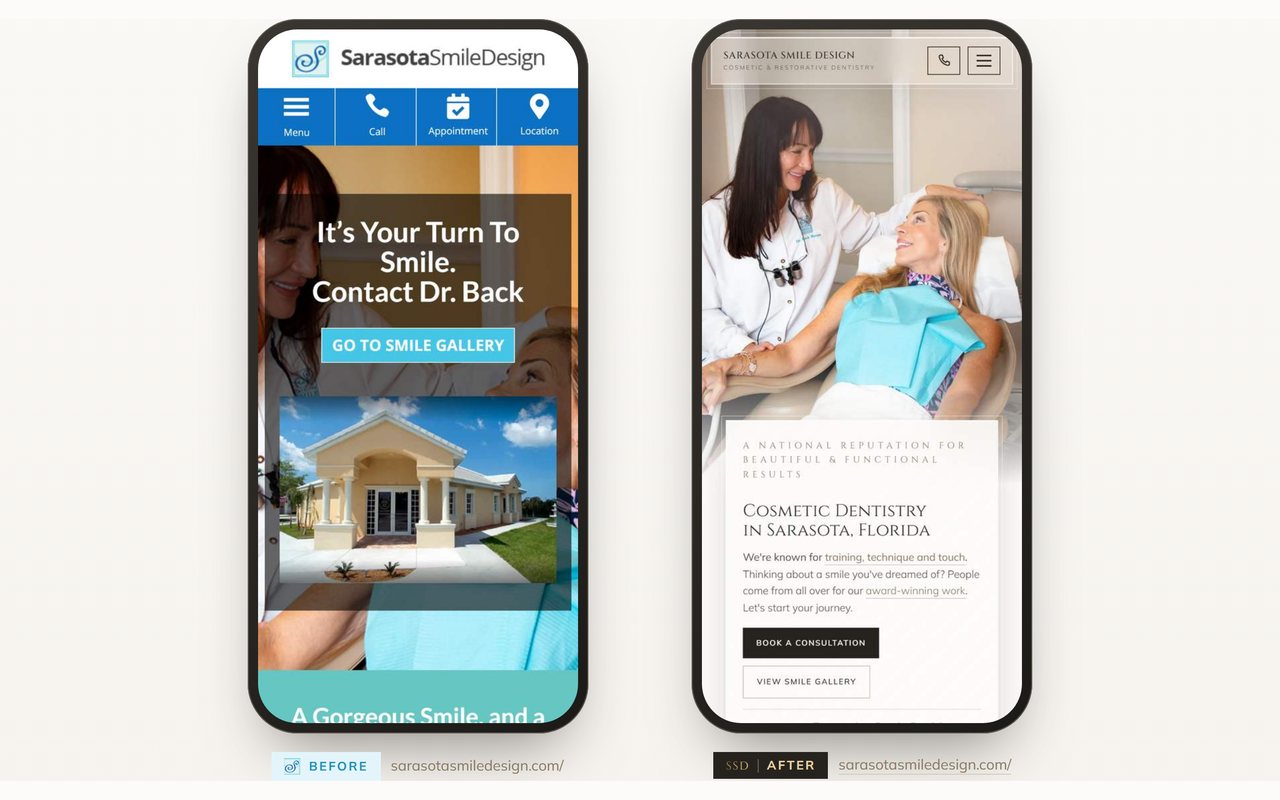
The mobile site, rebuilt page by page.
From Sarasota Smile Design →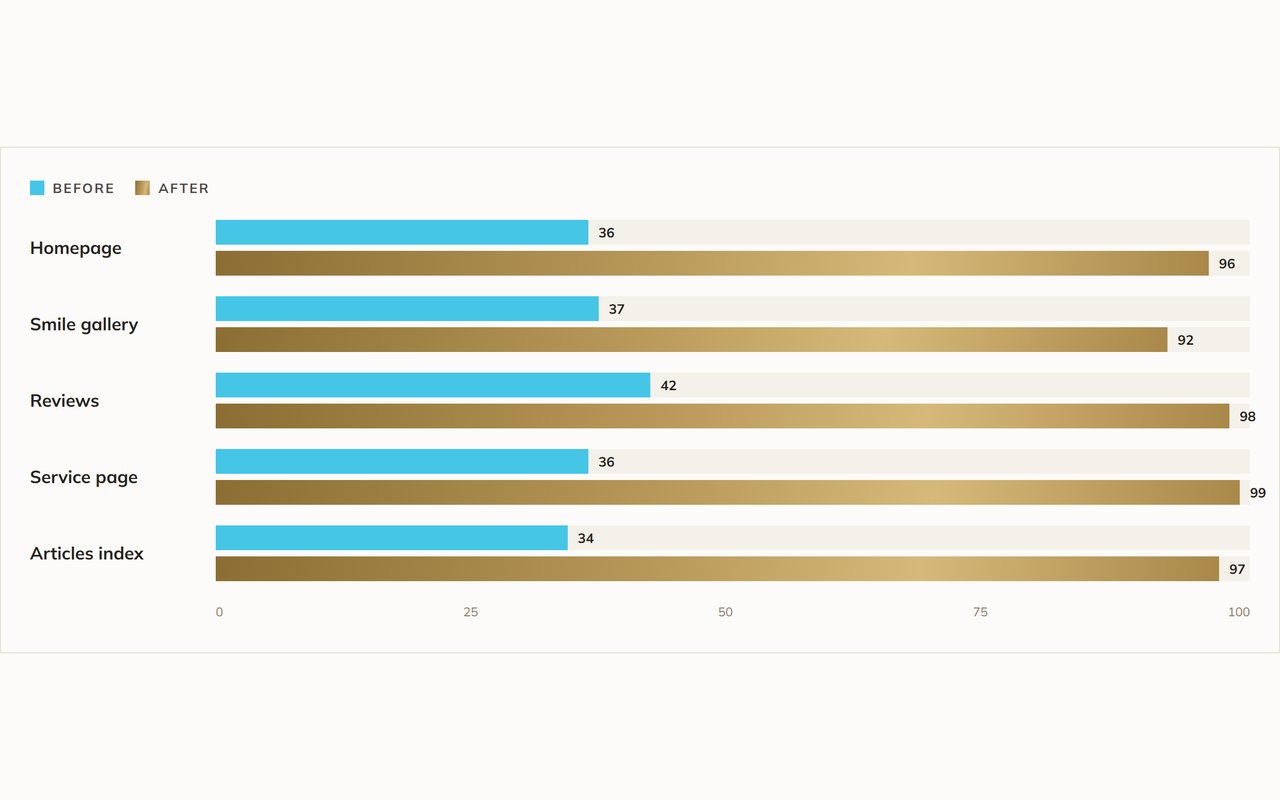
Mobile speed score 36 to 96 on the homepage.
From Sarasota Smile Design →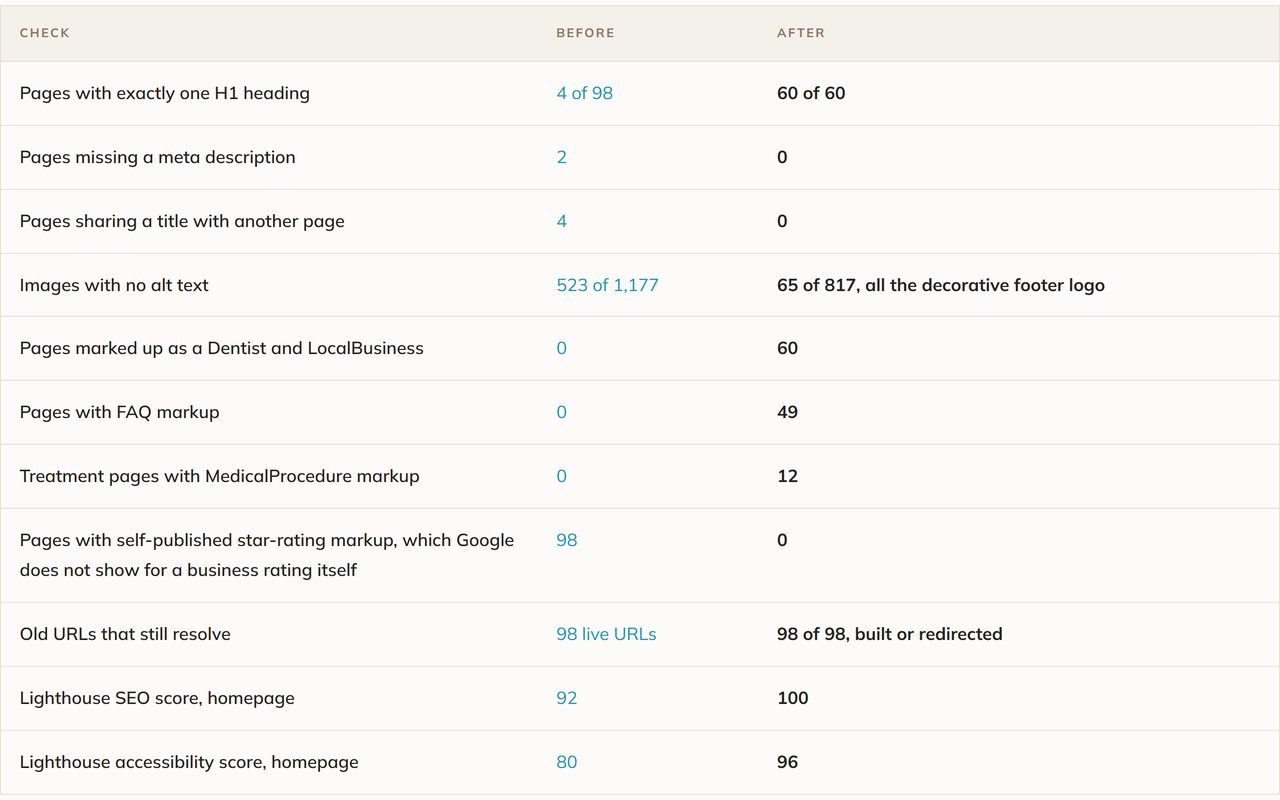
One H1 on 60 of 60 pages, up from 4 of 98.
From Sarasota Smile Design →The 10 secrets of a dental site that books
Design the phone first
70%+ of your visitors never see the desktop layout. Design the thumb experience first and let desktop follow — the reverse is how practice sites end up with a booking button nobody can reach one-handed.
Booking above the fold, every page
One tap from anywhere on the site to a real appointment. Every extra step between intent and a booked slot hands the patient to the practice down the road who made it easier.
Answer insurance before it's asked
The first question a general-dentistry patient has is whether you take their plan. Bury it and they bounce. A clear plans page and a plain answer about out-of-network benefits prevents the most common silent exit on a dental site.
A deep page for every procedure
Cost range, candidacy, what the visit is like, recovery. That library is the entire organic traffic engine and the thing AI engines can actually cite. A single 'Services' list page is a dead end for both.
Keep patient data out of your ad pixels
Standard form builders and tracking tags can leak health information, and regulators have made tracking technology a specific compliance issue. Use BAA-covered forms and keep health details out of analytics without giving up conversion data.
Real photos of the real office
Stock photography of models with impossible teeth reads as exactly what it is. Photos of your actual operatories, your actual team, and your actual front desk do more for conversion than any design trend.
Reviews on the page, not just a badge
Pull procedure-specific reviews onto the matching procedure page with review schema. Someone reading three implant reviews on your implant page converts. A sitewide '4.9 stars' badge is wallpaper.
Structure it so AI can quote it
Direct answers up top, FAQ schema, Dentist and LocalBusiness markup, named clinician authorship. That's what gets a practice pulled into ChatGPT answers and AI Overviews — a surface a 2019-era site can't reach.
Build to WCAG 2.1 AA
One in four US adults lives with a disability, and accessibility lawsuits target medical practices specifically. Contrast, keyboard navigation, and alt text are risk management and better usability in the same move.
Own the asset
If your site lives inside an agency's proprietary platform, you're renting your own front door and you'll pay to leave. Insist on owning the domain, the code, the hosting, and the analytics from day one.
Straight answers
How much does a dental website cost?
A serious custom build with a full procedure library runs into five figures; template refreshes cost far less and perform accordingly. The question that matters is what a new patient is worth — at $7,000-$15,000 in lifetime value, a handful of extra bookings a year pays for the build.
WordPress or a modern stack?
Either works. WordPress is right when your team needs to edit content daily without a developer. A modern static build wins on speed and security. We build both and pick based on who maintains it after launch, not on preference.
Will a new site hurt my rankings?
Only if it's migrated carelessly. Preserved URLs, correct redirects, and unchanged content structure protect what you've earned — and the speed gain usually improves rankings within weeks. Botched migrations are the single most common way practices lose traffic.
Do I own the site when it's done?
With us, yes — domain, code, hosting, and analytics in your name. Many dental website companies keep the site on their platform and the leverage that comes with it. Ask before you sign, not after.
Let's look at your current site.
Free teardown: mobile speed, booking friction, what ranks, what doesn't, and what it'd take to fix.