Marketing built for
the cases that pay.
Hygiene keeps the schedule full. A handful of cases keep the practice profitable — implants at $20,000 an arch, a veneer case at $30,000, the full-mouth rehab nobody in your market is marketing for. We build the search, video, ads, and AI visibility that put those patients in your chair — for one practice per market.
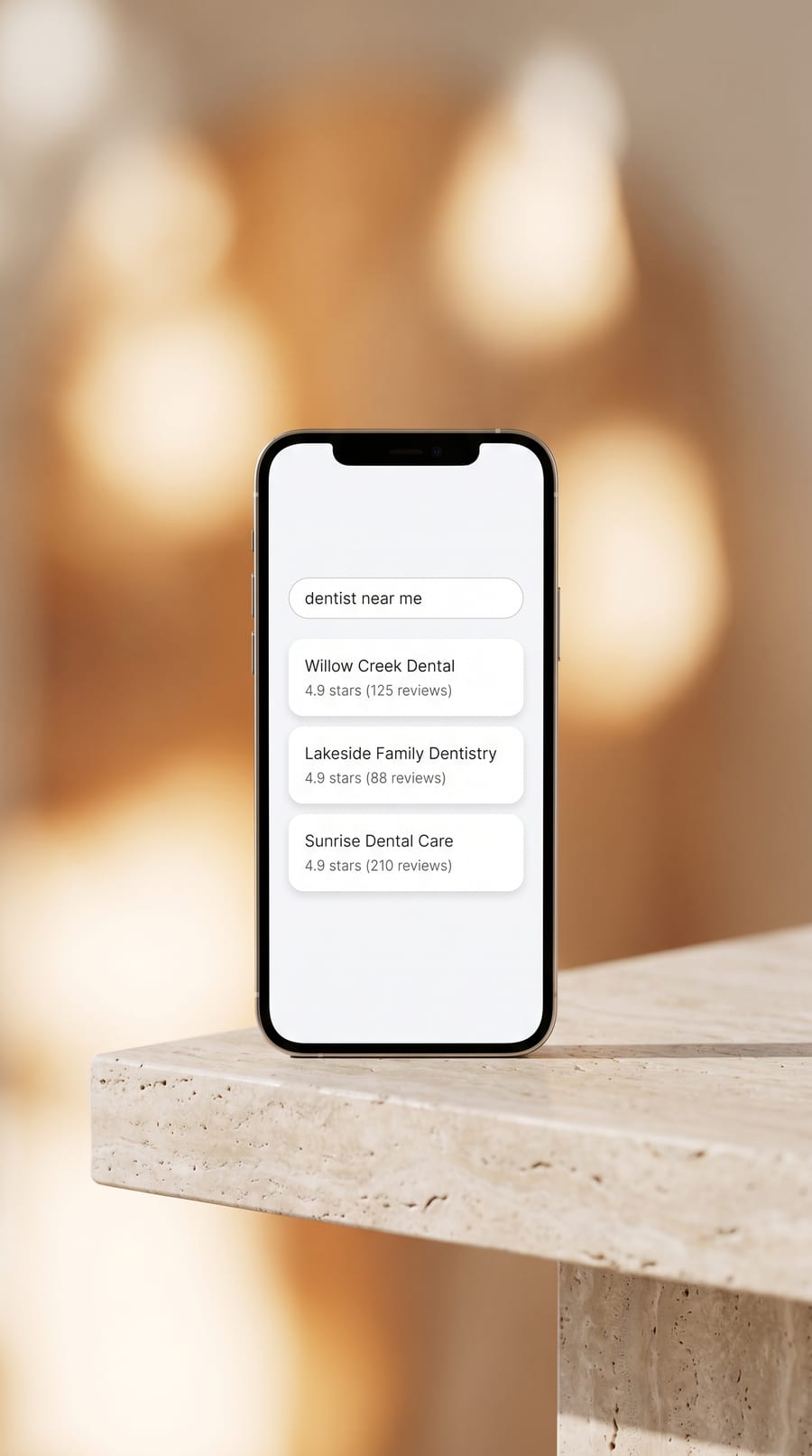
Most of your revenue rides on a few percent of your patients
We do this in the same search results.
Real screenshots from our work: Sarasota Smile Design, a cosmetic dental practice, and our plastic, facial, and hair practices. Every one links to its case study.
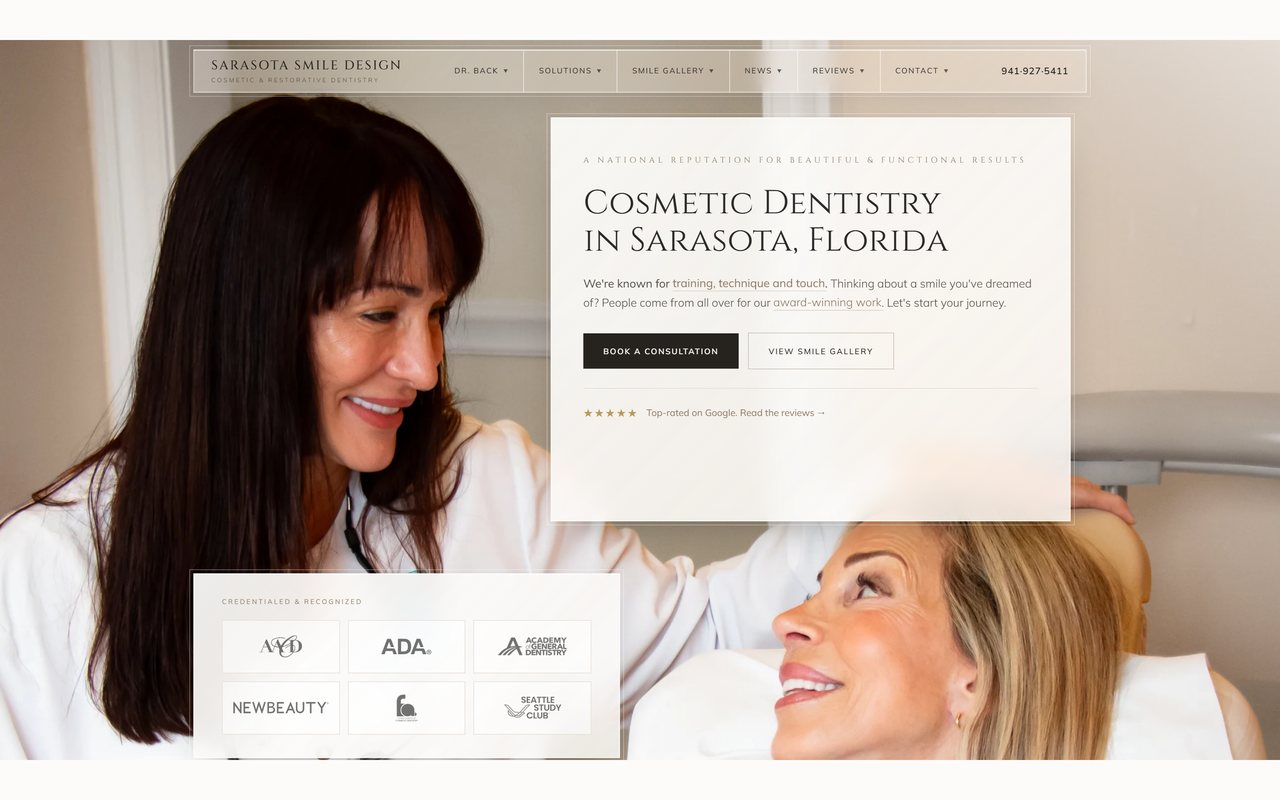
A cosmetic dental site rebuilt around video and the practice's own photos.
From Sarasota Smile Design →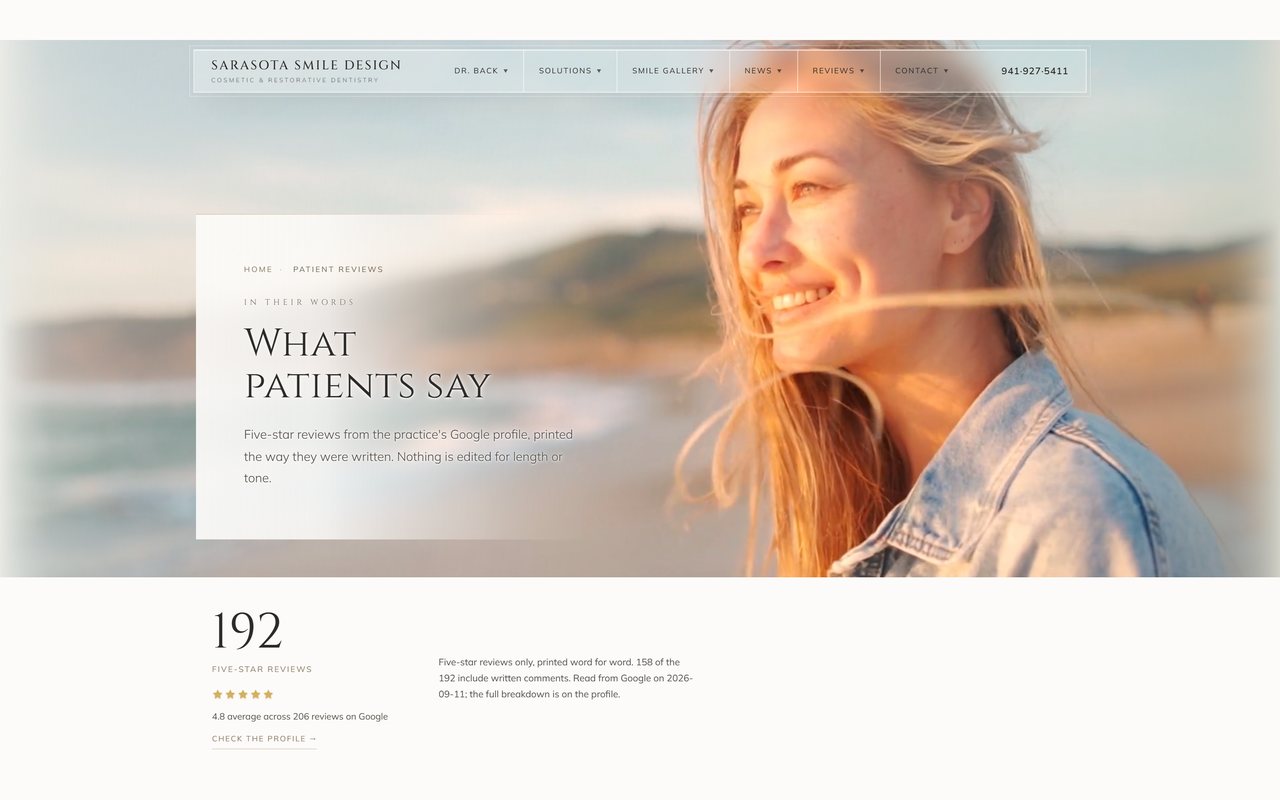
192 five-star Google reviews, 158 printed word for word.
From Sarasota Smile Design →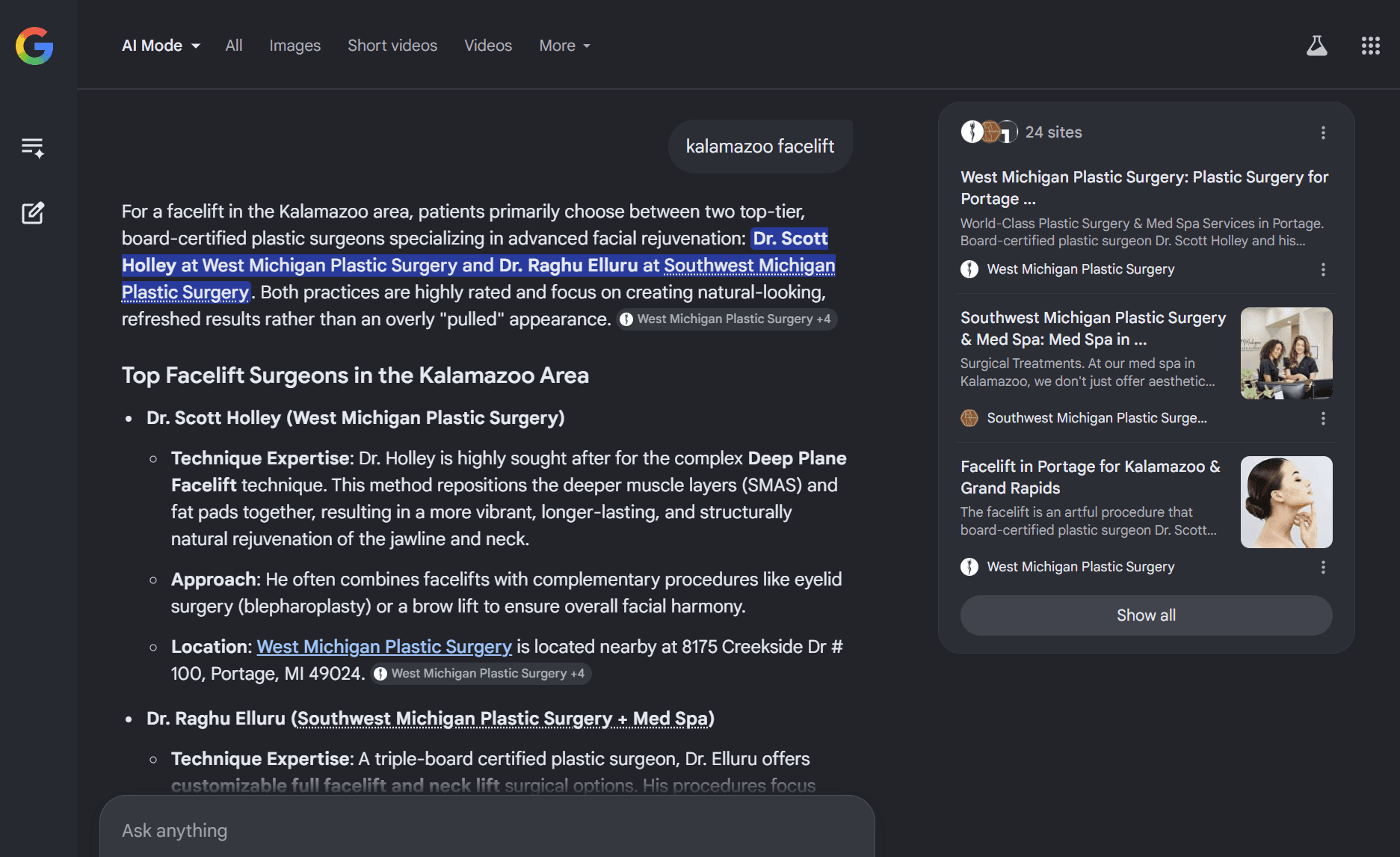
Google's AI names our client first, by name.
From West Michigan Plastic Surgery →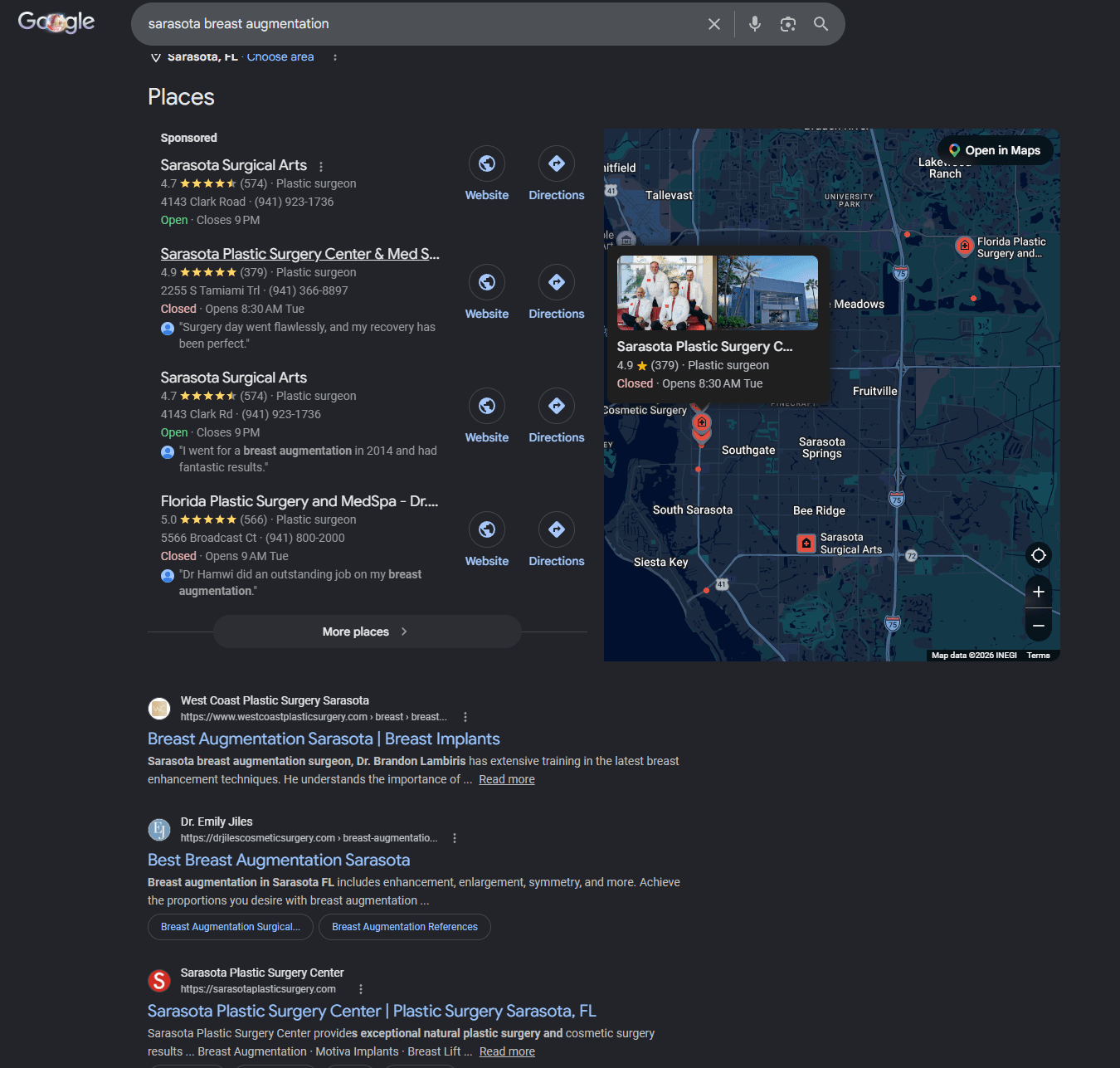
#1 in the map pack — on 379 five-star reviews.
From Sarasota Plastic Surgery →The 10 secrets of dental marketing
Market the 5% that carries the revenue
Hygiene and exams keep the schedule full and the margins thin. Implants, full-arch, veneers, and sedation are where a marketing dollar changes the P&L. Point the budget at the procedures, not at the practice name.
Win the three-pack before anything else
Dental is the densest local category in medicine, and three results take the calls. Profile completeness, review velocity, and proximity decide who sits there — and that fight is cheaper to win than any content program.
Your existing chart is the cheapest new revenue
Thousands of people already trust you and have untreated diagnosed work sitting in their chart. A recall sequence and a treatment conversation at the hygiene visit converts them for a fraction of what a cold lead costs.
Publish your prices
Every patient searches what a procedure costs, and if you don't answer, a third-party site does — and takes the patient. Honest ranges plus financing math prequalify the consult and remove the objection before it forms.
Be the practice ChatGPT names
32% of patients now ask an assistant first, and half of ChatGPT use is asking for a recommendation. Being cited takes schema, answer-first structure, and named clinician authorship — not more blog posts.
Get pulled into the AI Overview
Google's AI answer sits above every ranking you have and resolves the cost and comparison questions patients used to click for. Tight definitions, FAQ schema, and question-formatted headers are how you get quoted inside it instead of buried under it.
Put the dentist on camera
Patients pick a person, not a practice. Sixty-second explainers of the procedures you want more of build trust before the consult and outperform every stock photo on your site. Two shoot days a quarter sustains the whole library.
Answer the phone
38% of new-patient calls go unanswered during business hours. No amount of ad spend survives that. Call tracking, recording, and front-desk training routinely find more revenue than the next campaign would.
Ask for the review at the right moment
Volume, recency, and treatment keywords in the review text are what move the map pack. Ask at the reveal or the post-op check, reply to every one, and keep the velocity steady — a stale profile reads as a stalled practice.
One practice per market, or none of this matters
An agency running three practices in one zip code is bidding against itself with your money. We take one practice per market. Ask any agency you're considering whether they'll say the same in writing.
Straight answers
How much should a dental practice spend on marketing?
Established practices run 4-7% of gross revenue. Practices in growth mode, or new ones building from zero, run 10-20% for the first year or two. Work backward from case value rather than the percentage — if a new patient is worth $7,000-$15,000 and costs $200 to acquire, the ceiling is your capacity, not your budget.
How long before dental marketing produces patients?
Google Business Profile and paid work produce calls inside 30-60 days. Competitive procedure rankings take 6-12 months in most metros. The procedure page library compounds from month six onward and keeps producing after you stop paying for clicks.
My schedule is already full. Why market?
A full hygiene schedule is not the same as a profitable one. Marketing shifts the composition of the schedule toward implants, full-arch, and cosmetic cases at several times the margin. That's a revenue-mix change, not a volume change.
Can we do this ourselves?
The Google Business Profile and the review ask, yes — and you should. The procedure library, the video, the schema, and paid management take a team and consistent hours nobody in a working practice actually has. Most self-managed programs stall at month four.
See what your market looks like.
We'll measure it: who ranks for your highest-value procedures, who the AI names, and what it takes to pass them. No obligation.