 Medical Advertising




















Correct listings
for AI search.
AI assistants and Google Maps describe your practice from listing sites: Google, Healthgrades, WebMD, Vitals, Zocdoc, Apple Maps and insurer directories. When those sites agree on your name, address, phone, hours and doctors, patients and AI answers find the right practice.
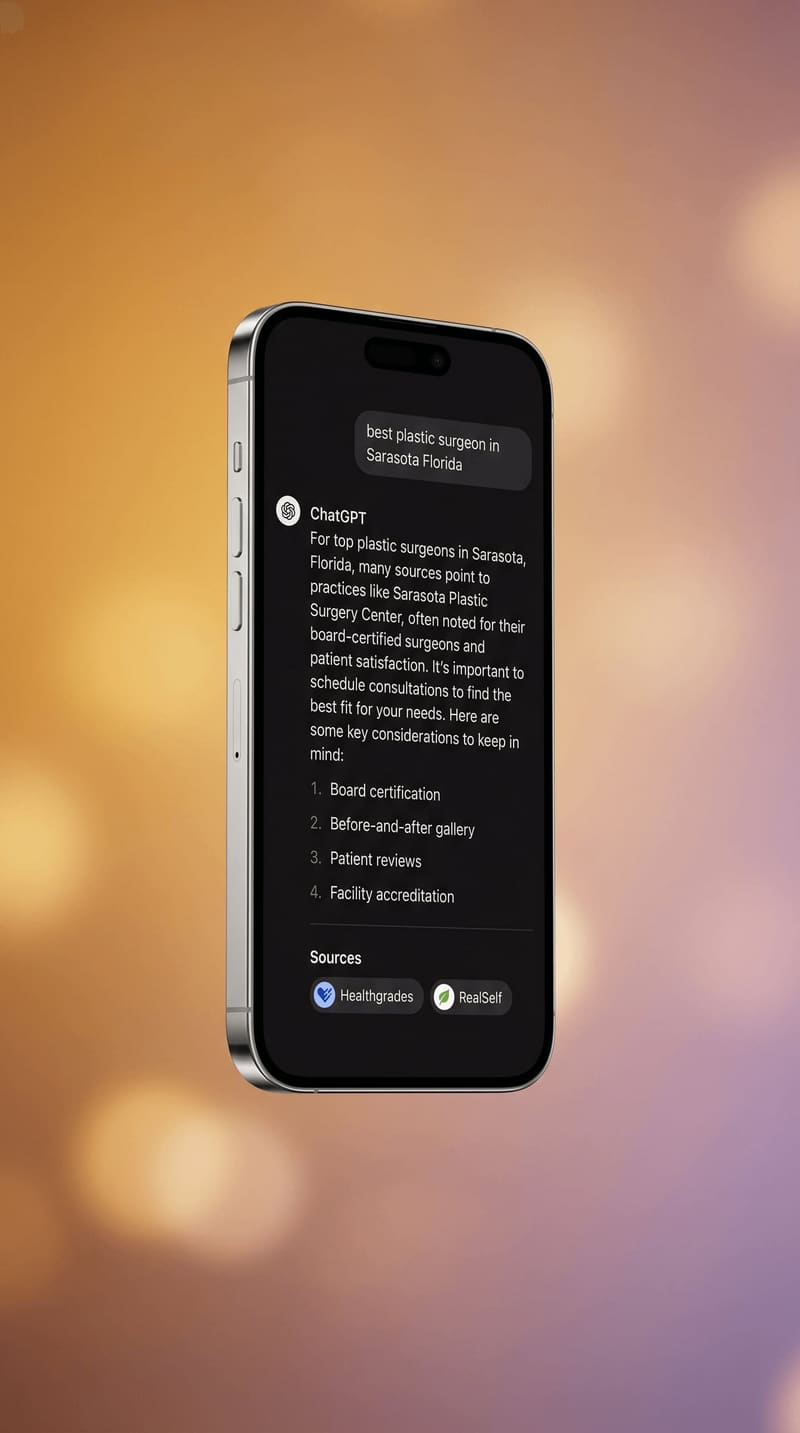
AI answers are built from listings.
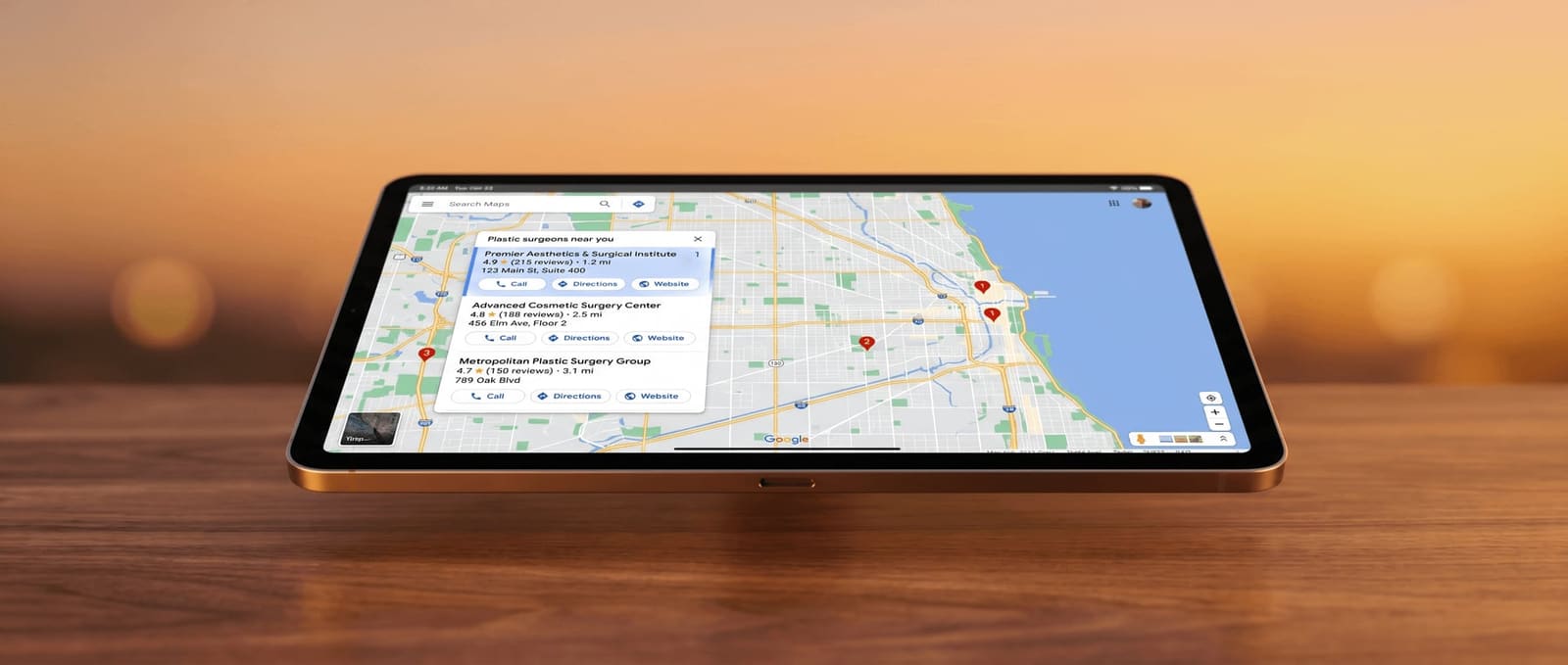
When a patient asks ChatGPT, Gemini or Google AI Mode for a surgeon, dentist or specialist nearby, the answer cites listing sites more than any other source in healthcare. The same listings drive the Google map pack, Siri and Bing. A practice with one set of correct facts across those sites gets named; a practice with three addresses and two phone numbers gets skipped.
Six places that describe your practice.
Each source feeds the others. A correction in one place can be undone by an old record upstream, so all six are kept in step.
Google Business Profile
The main source for Google Maps, AI Overviews, AI Mode and Gemini. One profile for the practice and one for each practitioner.
Medical directories
Healthgrades, WebMD, Vitals, Zocdoc, Doximity, U.S. News and RealSelf. AI assistants cite these for doctor and specialty questions.
Maps and assistants
Apple Maps feeds Siri. Bing Places feeds Copilot and ChatGPT search. Yelp is licensed by ChatGPT and Perplexity.
Data aggregators
Data Axle, Foursquare and Localeze sell business data to maps, apps and directories. Old data here flows back out to everything downstream.
Government and insurer records
The NPI registry, CAQH, state license boards and insurer directories. Directories copy these records, and insurers re-verify them every 90 days.
Your website
A page for each doctor and each service, with structured data that links every directory profile back to the practice.
What we find on most audits.
An old address after a move
The NPI record, the license board and insurer directories still show the old suite or building. Directories copy it back.
A doctor who left is still listed
Patients call for a provider who is gone, and AI answers send them to the wrong practice.
Duplicate profiles
Two Google or Healthgrades profiles for the same doctor split the reviews and confuse the answer.
Different phone numbers
A tracking number on one site, the front desk on another, an old line on a third. Each one weakens the match.
Wrong hours, specialty or insurance
A patient who is told the wrong hours or a plan you do not take books somewhere else.
Profiles nobody has claimed
Unclaimed profiles are built from public records and never corrected. Some sites accept changes only from the doctor.
Keep one record of the correct details for the practice and for each doctor. Claim the profiles that only a doctor can claim: Healthgrades, WebMD and Vitals, Doximity. Keep the NPI record and CAQH current. Give your marketing team manager access to Google, Apple, Bing, Facebook and Yelp. Then check the listings and the AI answers every quarter. Our listing management service runs this for you.
Listing accuracy questions.
Why does listing data matter for ChatGPT and other AI assistants?
AI assistants answer "who is the best surgeon near me" by reading listing sites and the practice website. In a 2025 study of 6.8 million AI citations, listings made up 52.6% of healthcare citations, the highest of any industry measured (Yext). When the details match across sites, the practice is easier to recommend.
Which sites matter most for a medical practice?
Google Business Profile first. For dentists, 57% of AI citations point to it, followed by Yelp at 15.4% (BrightLocal, 2026). Then Apple Maps, Bing, Healthgrades, WebMD and Vitals, Zocdoc, Doximity and the insurer directories.
Can an agency correct every listing?
No. Google, Apple, Bing and Facebook accept changes from an authorized manager. WebMD and Vitals accept directory corrections only from the doctor, Doximity requires the doctor's own login, and the NPI record and CAQH are updated by the provider or their credentialing staff.
How long do corrections take to show?
Google and Facebook update within days. Data aggregators pass changes to downstream sites over 2 to 8 weeks. Medicare Care Compare takes 2 to 4 months after a PECOS update.
Does the NPI record really matter?
Yes. Federal rules require NPI updates within 30 days of a change (45 CFR 162.410). Insurers and several directories copy the NPI practice address, and insurers must verify their directories every 90 days under the No Surprises Act.
Is NAP consistency still a ranking factor?
Consistency on Google, Bing and Apple is one of 187 factors in the 2026 Local Search Ranking Factors survey; the top AI visibility factors are "best of" lists, a page per service, and mentions on industry sites (Whitespark). Correct data is the floor those factors build on.
Check your listings against the AI answers.
We compare your practice and each doctor across Google, Apple, Bing, Healthgrades, WebMD, Vitals, Zocdoc and the NPI registry, then show what ChatGPT, Gemini and Google AI Mode say about you.
- TailoredCustom to your market. No templates.
- Need Market Exclusivity?We offer a Premium tier, one practice per metro